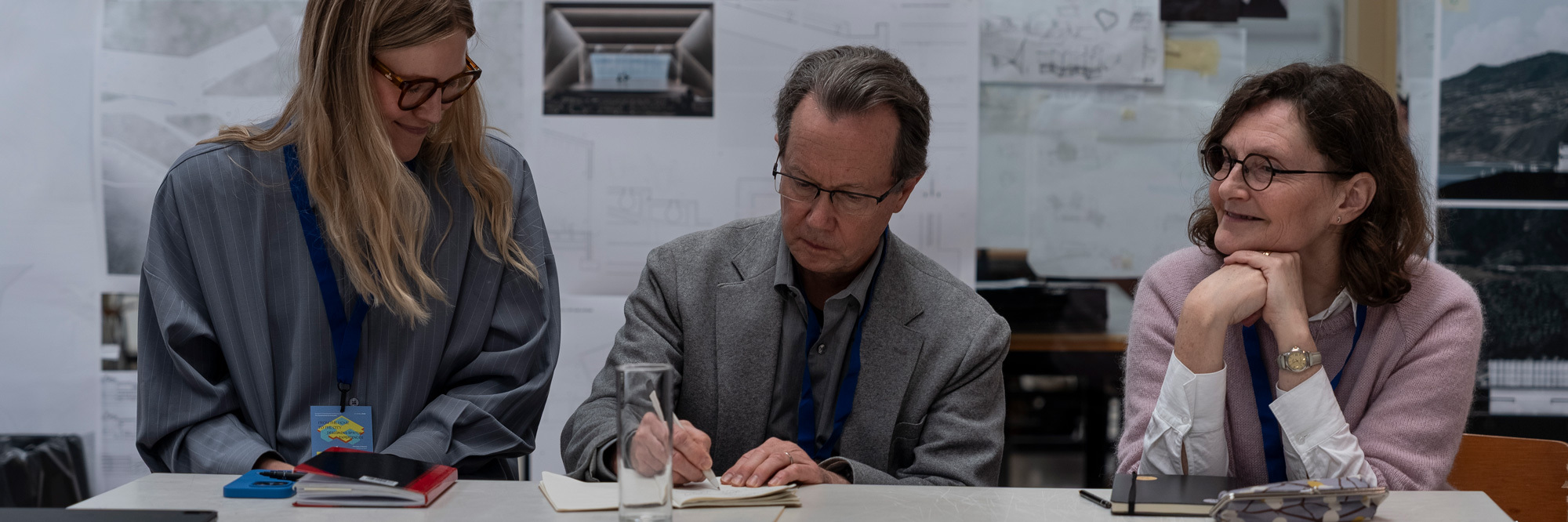
Exploring the intersections of design, ecology, and human experience.
The Constructed Environment Research Network examines the social, ecological, and material dimensions of the built world. Member-based and scholar-led, the Network connects architects, urbanists, designers, and researchers working to understand how environments are shaped—and how they, in turn, shape us.
Sixteenth International Conference on The Constructed Environment, Universidad de Navarra, Pamplona, Spain (2026)
Our Platforms
Our Platforms
Founded in 2010, the Constructed Environment Research Network took shape as a gathering point for architects, planners, designers, and scholars interested in how built form, ecology, and social life meet. What began as a conversation about architecture, design, and sustainability has grown into a global community rethinking how streets, buildings, infrastructures, and landscapes mediate relations between the natural and the social worlds. Today, the Network brings together researchers and practitioners who treat the constructed environment as both a material reality and a cultural project—one that organizes everyday experience, power, and planetary futures.
Annual Conference
The International Conference on the Constructed Environment is held each year in collaboration with a leading university or cultural institution. Beginning with its inaugural meeting at Fondazione Querini Stampalia during the Venice Architecture Biennale, the conference has since traveled to University Center Chicago, UBC Robson Square (Vancouver), Universidade Nova de Lisboa with the Lisbon Architecture Triennial, the University of Pennsylvania, the University of Arizona, Cracow University of Technology, Wayne State University, Centro Cultural Vila Flor (Guimarães), the University of California, Berkeley, the University of Calgary, the University of Monterrey, the University of Hawai‘i at Mānoa, the University of Vienna, and HTW Berlin, among others. Each edition stages a different angle on design, material culture, and spatial justice, inviting participants to test ideas, share practice, and build collaborations across regions.
Journal
The International Journal of Architectonic, Spatial, and Environmental Design is a peer-reviewed, hybrid open access journal focused on human configurations of the environment and the relations among constructed, social, and natural systems. Its articles move between theory and practice, empirical study and design speculation, examining spaces that range from domestic interiors to infrastructural landscapes. All submissions undergo double-anonymous, rubric-guided peer review, with editorial feedback aimed at sharpening arguments, clarifying methods, and strengthening the link between research and the challenges facing contemporary built environments.
Book Imprint
The Constructed Environment Book Imprint supports monographs and edited collections that take a deeper dive into architecture, urbanism, and environmental design. The list ranges from broad conceptual works to tightly focused case studies, and welcomes both cross-cutting and niche topics. Guided by an inclusive acquisitions philosophy and offering open access pathways, the imprint provides space for extended arguments, collaborative volumes, and thematically curated collections that connect design thinking with questions of ecology, heritage, regulation, and everyday use.
Online Member Knlowdge Community
The Constructed Environment Research Network’s Member Knowledge Community on CGScholar keeps the conversation moving between conferences. Members maintain profiles, share papers, document projects, and respond to calls within a shared digital space. A multimodal authoring environment and light, community-guided review process help refine contributions before wider sharing, while archived programs, recordings, and publications keep the history of the Network in view. Together, these features create a continuous pathway linking conference sessions, journal articles, and books within a living, year-round environment for research on architecture, design, and the built world
Fifteenth International Conference on The Constructed Environment, Hochschule für Technik und Wirtschaft Berlin (HTW Berlin) - Campus Wilhelminenhof, Berlin, Germany (2025)
Leadership
The Network is chaired by Dr. Fabian Neuhaus, Associate Professor, School of Architecture, Planning and Landscape, University of Calgary, Canada. His research focuses on temporal and ecological dimensions of urban form and architectural practice.
Fabian Neuhaus
Associate Professor, School of Architecture, Planning and Landscape, University of Calgary, Calgary, Canada
Partnerships extend the Network’s member-based, scholar-led mission—linking universities, architecture schools, cultural organizations, and design institutions that share a commitment to understanding and transforming the built environment.
Hochschule für Technik und Wirtschaft Berlin University of Applied Sciences
Berlin, Germany
Universidad de Navarra
Pamplona, Spain
University of Minho School of Architecture
Guimarães, Portugal
Landscapes, Heritage and Territory Laboratory
Guimarães, Portugal
Centro Cultural Vila Flor Guimarães
Guimarães, Portugal
Guimarães Municipality
Guimarães, Portugal
Geography and Geology, School of Environmental Sciences
University of Hull Hull, UK
Heidelberg University
Heidelberg, Germany
Institute of Geography
Heidelberg University Heidelberg, Germany
University of Calgary
Calgary, Canada
University of Monterrey
Monterrey, Mexico
University of Hawai'i at Mānoa, School of Architecture